
最新一期
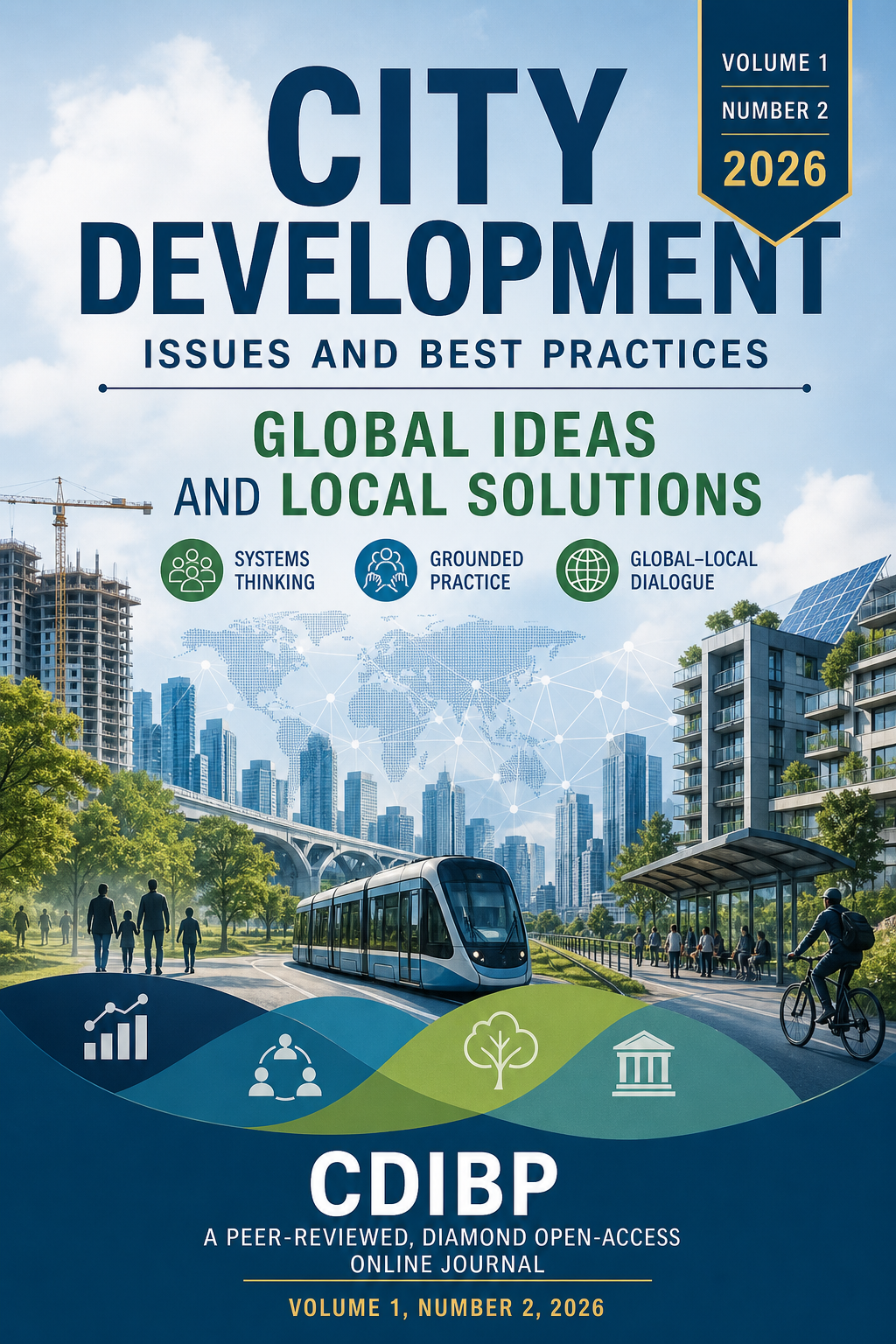
社论导言- 第二期
City Development: Issues and Best Practices (CDIBP)
本期《City Development: Issues and Best Practices(CDIBP)》在创刊号的基础上,进一步明确了本刊的学术定位:将城市研究置于系统思维、实践导向与全球—地方互动的交汇点之上。本期尝试突破传统的部门化分析框架,从更加整体与关联的视角理解当代城市问题,将城市视为一个多尺度、复杂互动的系统。
来自加拿大、中国、突尼斯和肯尼亚的研究共同揭示了一个核心事实:无论是住房可负担性、气候风险,还是基础设施压力,这些问题日益呈现出系统性特征,但其解决路径依然深深嵌入于具体的制度、社会与空间情境之中。本期的价值不仅在于案例的多样性,更在于这些研究共同揭示了结构、主体、知识与实践之间的动态互动关系。
重构城市系统:从结构到行动
在结构层面,Gianni通过对加拿大与中国住房体系的比较分析指出,两者并非简单对立的模式,而是在供给、可负担性与治理能力之间呈现出不同形式的同一结构性张力 。这一视角提示我们,应超越政策简单移植,将住房问题理解为由长期制度、人口与金融机制共同塑造的复杂系统。
从结构转向行动层面,Enns et al. 以内罗毕Mathare非正规社区为例,展示了青年群体在气候灾害中的应对实践 。研究表明,城市韧性并非仅依赖制度供给,而是在本地网络、社会信任与社区行动中不断生成与强化。
知识、转化与实践
本期的一个关键问题在于知识生产与实践应用之间的张力。Moghaddam et al. 对城市人工智能研究进行了系统梳理,指出技术发展迅速,但与政策决策之间仍存在明显脱节 。尤其是在可持续性与公平性方面的整合不足,反映出技术进步并不必然转化为有效的城市治理工具。
与此相呼应,Achour-Younsi et al. 从教学方法出发,提出以项目制学习为核心的实践路径 。通过将教学嵌入真实生态社区情境,该研究展示了如何在教育过程中整合分析能力、环境绩效与社会责任,从而推动知识向实践的有效转化。
城市实践中的交汇
上述结构性、社会性与知识性维度,最终在基础设施与公共服务领域交汇。Shileche 对内罗毕公共交通系统的分析表明,历史路径、制度碎片化与快速城市化共同塑造了当前的交通困境 。在这一意义上,基础设施不仅是技术系统,更是治理选择与制度约束的具体体现。
综合来看,本期文章表明,城市问题无法通过单一领域或孤立干预加以解决。住房体系塑造机会与不平等,同时在社会实践中不断被重新解释;技术创新拓展分析能力,但若缺乏制度整合则难以发挥作用;教育与方法创新为实践转化提供路径,而现实实施则揭示其约束与可能性。城市发展因此呈现为一个持续调整的过程,是结构条件、社会主体、知识体系与实践行动之间不断协商与对接的结果。
展望
本期进一步强化了CDIBP作为一个整合性与实践导向学术平台的角色。通过连接比较研究、社区实践、技术反思与教学创新,本刊为理解和应对城市转型提供了更加具有操作性的视角。
在此,我们衷心感谢所有作者与评审专家的贡献,并感谢ICCCASU长期以来在推动全球城市议题与实践融合方面所发挥的重要作用。
Full-Length Article
Welcome to the City Development: Issues and Best Practices Journal
Welcome to the City Development: Issues and Best Practices Journal. Here we are dedicated to fostering a deeper understanding of urbanization's challenges and opportunities in our rapidly evolving world. We believe that to foster sustainable and inclusive growth, we must embrace knowledge from diverse experiences and perspectives.
Our Mission
Our mission is to provide a rigorous and influential platform for academic research, case studies, and applied research addressing the most pressing issues in urban development. We are particularly interested in the lessons we can learn from the developing world, yet we also value insights from developed nations. We aim to bridge the gap between academia and policy-making, thus helping cities across the globe to grow more sustainably and inclusively.
What We Offer
This journal encompasses a broad range of topics, including urban equity and inclusivity, reforming informal settlements, climate change adaptation, urban risk management, privacy and security, urban resilience, participatory policy, and more. We offer our readers access to cutting-edge research and best practices, and a platform to share and discuss their own ideas and experiences.
Who We Serve
The City Development: Issues and Best Practices Journal serves a diverse audience, including geographers, planners, engineers, urban designers, architects, political scientists, sociologists, economists, and policy makers. Whether you're an academic looking for the latest research, a professional seeking practical insights, or a student exploring the field, you'll find valuable resources and a vibrant community here.
How to Get Involved
We invite scholars and practitioners to submit their research and case studies. Our editorial team, backed by a rigorous peer-review process, ensures that every piece we publish meets the highest standards of academic excellence and practical relevance.
Join us in this journey towards understanding and shaping the cities of the future. We look forward to your participation and contribution in this quest for knowledge and sustainable urban development. Welcome aboard!
